How to Winterize Sprinkler Lines in Nampa Without Touching the City Valve
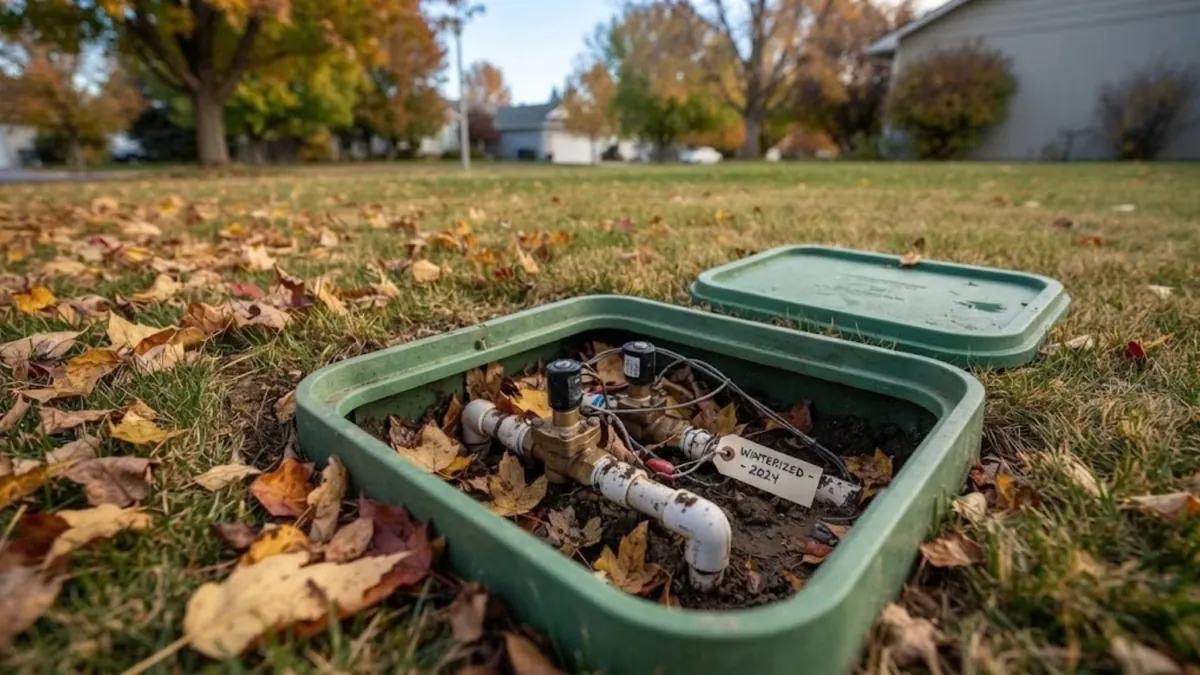
Every fall, Nampa's pressurized irrigation system shuts down for the season, and every spring some homeowners discover a split fitting, a cracked backflow valve or a sprinkler zone that sprays sideways. Almost all of that damage traces back to water left sitting in lines through the winter.
This guide walks through how Nampa's irrigation setup works, which valves are yours to touch, and how to drain or blow out a residential system so it survives January. It is written for homeowners on the city's pressurized irrigation, though most of it applies to any canal-fed system in the Treasure Valley.
Dealing with a plumbing problem right now? Call (208) 679-8357, answered 24/7.
How Nampa's Irrigation System Is Split Between You and the City
Nampa gets most of its irrigation water through canals supplied by mountain reservoirs such as Lucky Peak, Arrowrock and Anderson Ranch, delivered through the Nampa & Meridian, Pioneer and Boise-Kuna irrigation districts. In many subdivisions, the City of Nampa's Waterworks Division runs the pump stations, mains and curb stop valves that feed each lot.
Everything past the curb stop belongs to you: the service line to your yard, your own shutoff valve if you have one, any backflow device, the sprinkler valves, pipe and heads. The city has said plainly that it will not repair a customer's service line.
The city also asks residents and yard maintenance crews not to operate city irrigation valves when blowing out sprinkler lines, even when those valves sit on private property. If you are not sure which valve is which, the Water and Irrigation Division takes calls at 208-468-5860.
Which Valve You Can Turn and Which You Cannot
Before draining anything, identify what is in your valve box and along your service line.
| Valve or device | Who owns it | Can you operate it? |
|---|---|---|
| City curb stop or main valve | City of Nampa | No, emergency use by the city only |
| Your own shutoff on the service line | Homeowner | Yes, this is the one to close |
| Backflow assembly, if present | Homeowner | Yes, drain it through its test cocks |
| Zone valves in the sprinkler box | Homeowner | Yes |
| Pump or filter on a private system | Homeowner | Yes, follow the maker's shutdown steps |
If you do not have your own shutoff, the city has encouraged residents to install one. It is a small job that makes every future repair and every winterization easier.
Need a Plumber Now?
The 24/7 line covers emergencies and planned work across Nampa.
When to Winterize in Nampa
The city closes its pressurized system when the supplying irrigation districts end their season. According to the City of Nampa, in 2025 its system closed on Monday, October 6, to match the Nampa & Meridian Irrigation District. The exact date changes with water supply each year.
Plan to winterize soon after your water stops, and before the first run of hard overnight freezes. Nampa's average January low is about 21°F, but October and November cold snaps can drop below freezing well before winter officially starts.
Do not wait for a warm afternoon in December. Once water has frozen in a valve body, the damage is already done.
What to Do to Drain or Blow Out a Residential System
There are two common methods. Draining works on systems designed with drain valves. Blowing out with compressed air clears systems without them.
- Close your own shutoff. Turn off the homeowner valve on your service line, never the city valve.
- Set the controller to off or rain mode. This keeps the timer from opening zones during winter.
- Open manual or automatic drains. If your system has drain valves at low points, open them and let the lines empty.
- Blow out with low-pressure air if needed. Connect a compressor at the designated fitting and run each zone briefly at modest pressure, usually no more than about 50 to 80 psi for rigid PVC systems, until only mist comes out. Excess pressure can crack fittings and heads.
- Drain the backflow device. Open the test cocks and ball valves partway so water can escape, and insulate the assembly if it is above ground.
- Protect exposed pipe. Wrap any above-ground piping at the valve box or backflow assembly.
When to Hand It Off
Blowing out a system with too much pressure, or with the backflow device closed, is one of the most common ways homeowners damage their own irrigation. If your system includes a backflow assembly, a pump or unusual fittings, a professional blowout is inexpensive insurance.
A plumber can also add a proper homeowner shutoff and drain points if your system lacks them, and test a backflow assembly that has been through a few winters. If an irrigation line split last winter and you only found it in spring, repairing freeze-split lines covers finding and fixing that damage.
What to Check When Water Comes Back in April
Most freeze damage shows up at startup, so a short spring check catches it early.
| Check | What a problem looks like | Likely cause |
|---|---|---|
| Backflow assembly | Water spraying or dripping from the body | Cracked from freeze |
| Valve box | Standing water or constant flow | Split fitting or valve |
| Each zone | Geysers, dry spots or weak spray | Broken head or cracked lateral |
| Yard between curb and house | Soggy strip with no zones running | Service line leak |
City crews note that pressure is often inconsistent for the first weeks of the season while they test and flush lines, so give the system time before assuming a problem at your end. Homeowners in nearby towns such as Kuna, served by their own irrigation districts, face the same spring routine.
A Ten-Minute Job That Prevents Spring Repairs
Winterizing a typical Nampa sprinkler system takes little time once you know which valve is yours. Close your own shutoff, drain or blow out the zones at safe pressure, open up the backflow device and cover anything exposed.
Leave the city valve alone, even if it is in your yard. If you are unsure about any step, a quick call before the first hard freeze costs far less than a cracked backflow assembly in April.
Winterizing Mistakes That Cause Spring Repairs
Running a blowout with the backflow device fully closed traps compressed air and water inside it, which can crack the body. Using too much air pressure pops fittings and sprinkler heads, especially on older rigid pipe. Skipping a zone because it seemed dry leaves water in the low spots.
Another common mistake is shutting off the controller but leaving the homeowner valve open. If irrigation water is still trickling into the lines from the supply side, the system refills after you drain it.
Finally, some owners forget drip lines and garden bed zones. Drip tubing holds water in low loops and splits just like rigid pipe.
Winterizing Drip and Garden Bed Lines
Drip irrigation in flower beds and vegetable gardens uses thin tubing that sits on or just under the soil, where it is most exposed to freezing. Open the end caps of each drip line so water can drain out, and remove and store any filters and pressure regulators indoors.
Low loops of tubing hold water, so lift and drain them where you can. If you blow out drip zones with air, use low pressure, since the thin tubing and emitters damage easily.
Replacing a few emitters in spring is normal. Replacing whole runs of split tubing usually means water sat in them over winter.
Common Questions
It is a gamble. Some systems with good natural drainage survive, but any low spot, valve body or backflow device holding water can crack in a hard freeze. Draining takes little time compared with spring repairs.
Some homes were built without one. Do not use the city valve. Call the city's Water and Irrigation Division to confirm which valve is theirs, and consider having a homeowner shutoff installed.
Yes, and more carefully, because a system fed from drinking water should have a backflow device, and that device is especially prone to freeze damage.
After the city or your irrigation district announces water is flowing, typically mid-to-late April. Open valves slowly and check each zone for leaks.