Why You Should Get a Sewer Scope Before Buying an Older Nampa Home
A home inspection checks the roof, the furnace, the outlets and the water heater. It does not look inside the pipe that carries everything from the house to the street. For an older home, that pipe is one of the most expensive things that can be wrong, and a buyer inherits it the day the sale closes.
A sewer scope, a camera run through the line, closes that gap. Home-buying advisories for Nampa commonly suggest one on houses more than about 20 years old. This guide explains what it finds and how to use it.
Dealing with a plumbing problem right now? Call (208) 679-8357, answered 24/7.
What a Standard Inspection Misses
General home inspectors run water through fixtures and watch the drains. A partially blocked or damaged sewer line can still drain fine during a short test, especially in a vacant house that has not had a family using it for weeks.
The problems show up after move-in, when a household's daily volume hits a line with roots, a sag or a broken section. By then the repair is the new owner's bill.
Nampa's older neighborhoods near downtown were built across many decades, and some sewer laterals there are as old as the houses. Mature trees add root pressure on joints. Those are exactly the conditions a camera is built to check.
What a Sewer Scope Can Find and What It Means for a Sale
Here is how common findings typically translate into a buyer's decision.
| Finding | Seriousness | Typical buyer response |
|---|---|---|
| Clean, round pipe with smooth joints | None | Proceed with confidence |
| Light roots at one or two joints | Minor to moderate | Ask for cleaning and a repair credit or plan maintenance |
| Belly holding water in one section | Moderate | Get a repair quote, negotiate |
| Offset or separated joints | Moderate to serious | Get a repair quote, negotiate |
| Cracked, broken or collapsed sections | Serious | Negotiate replacement cost or reconsider |
| Heavy damage along most of the run | Serious | Full replacement quote before deciding |
Need a Plumber Now?
The 24/7 line covers emergencies and planned work across Nampa.
How a Sewer Scope Works During a Purchase
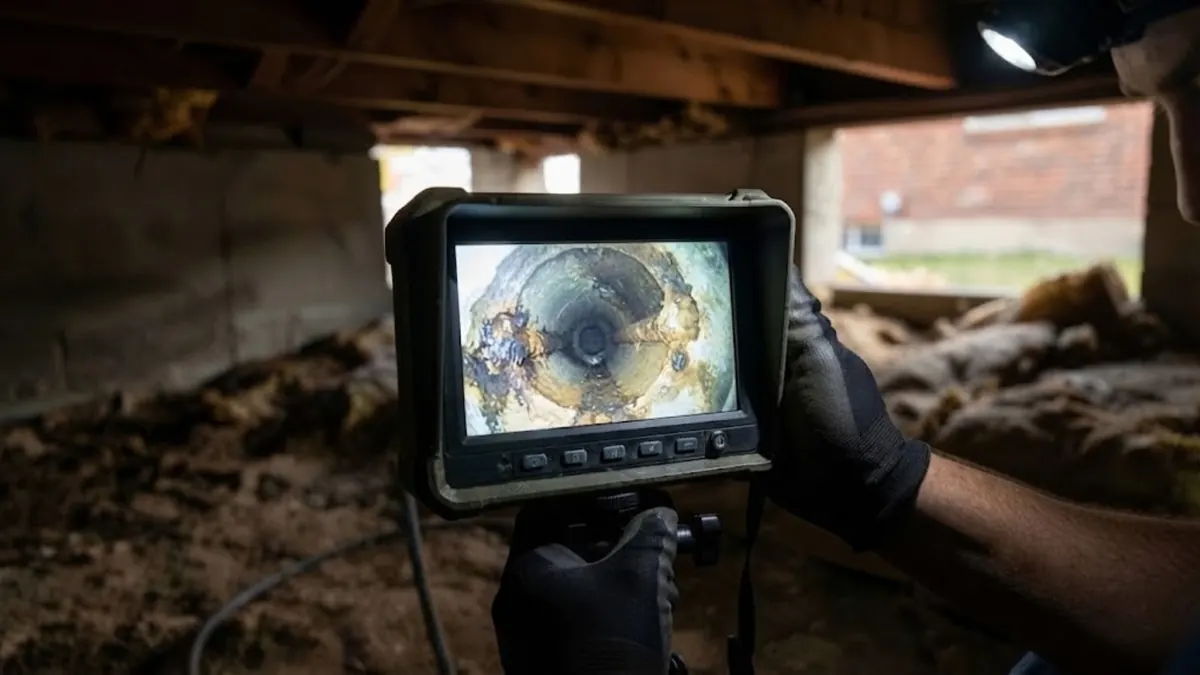
The camera goes in through a cleanout, usually a capped pipe near the foundation outside, and travels to the connection with the public sewer. A transmitter in the camera head lets the operator mark the location and depth of any problem from the surface.
You get a recording and a written summary. That record is what lets you negotiate on evidence rather than suspicion, and it is useful to keep after closing as a baseline for future service.
Schedule it early in your inspection period so there is time to get a repair quote if something turns up. Our Nampa sewer camera service page covers the service in detail.
What to Do Before and After the Scope
- Ask the seller about the sewer. Past backups, root cutting or repairs are all worth knowing. Ask for invoices.
- Confirm a cleanout exists. If there is none, the camera may have to go through a toilet, which the seller must allow.
- Schedule inside your inspection window. Leave time for a follow-up quote.
- Get a written quote for any problem found. A number on paper carries more weight in negotiation than a description.
- Keep the recording. It documents the line's condition on the day you bought the house.
When the Scope Finds Trouble
A problem on the camera is not automatically a deal breaker. A single root-intruded joint is a modest spot repair. A long run of broken pipe is a full replacement. The recording and a quote let you and the seller agree on which one it is.
Our guide to fixing sewer lines explains spot repairs, lining and replacement. Buyers looking in older parts of Caldwell face the same question, since that city's core is similar in age.
Is a Scope Worth It on a Newer House?
Less often, but sometimes. Construction debris, a joint that shifted as fill soil settled, or a sag from poor bedding can all show up in the first few years. If a newer home is still under a builder warranty, a scope before the warranty ends can document a defect while the builder is still responsible.
For homes over about 20 years old, it is one of the best-value checks a buyer can order.
Using Sewer Scope Results in a Purchase
When the scope finds a problem, buyers usually have three options: ask the seller to repair it before closing, ask for a price reduction or credit equal to a repair quote, or accept it and plan the repair themselves.
A seller-completed repair should come with an invoice and ideally a follow-up camera recording showing the fixed line. A credit gives you control over who does the work and how.
Either way, the recording and a written quote turn a vague concern into a specific number, which makes the conversation much easier for everyone.
Sewer Pipe Materials You May See on Camera
Older homes may have sewer lines made of materials that behave very differently as they age.
| Material | What to know |
|---|---|
| PVC or ABS plastic | Common in newer lines, smooth and resistant to roots at glued joints |
| Cast iron | Durable but corrodes and scales inside over decades |
| Clay tile | Resists corrosion, but joints can let roots in |
| Mixed materials | Common where part of a line was repaired, transitions can be weak points |
The camera shows which material you have and where it changes. Knowing the material helps you understand whether a problem is likely to stay isolated or show up elsewhere along the line.
Common Questions
Usually the buyer, as part of their inspections. It is a small cost compared with a sewer repair discovered after closing.
Typically an hour or so on site when there is an accessible cleanout, longer if access has to be arranged through a toilet.
The camera can often go in through a toilet flange with the seller's permission. Adding a cleanout later is worthwhile for future maintenance.
It means the line was in good shape that day. Roots and settling can develop over time, but a clean baseline is valuable.
It helps. Watching the footage as the camera moves lets you ask questions about what you are seeing, and the operator can point out the location of any problem on the ground.
A seller can limit access, but most allow it because it is non-invasive when a cleanout exists. Refusal is itself useful information for a buyer.