High Water Bill in Nampa? How to Check Your Meter for a Hidden Leak
A water bill that jumps with no change in habits is one of the clearest signs of a hidden leak. The water is going somewhere, you are paying for it twice through water and sewer charges, and the leak may be doing damage while it runs.
The good news is that your water meter can tell you a lot in about an hour, with no tools. This guide shows how.
Dealing with a plumbing problem right now? Call (208) 679-8357, answered 24/7.
Your Lawn Water Is Probably Not on This Bill
Most Nampa subdivisions water lawns through a separate pressurized irrigation system billed by lot size, not by the meter. So a green, soggy yard usually does not raise your metered bill, and a leaking sprinkler usually is not the cause of a big one.
There is an exception. If your home waters its lawn from city drinking water, or during months when irrigation water is off and a hose is used, outdoor leaks do show on the meter. According to the City of Nampa, using drinking water to irrigate raises both water and sewer charges.
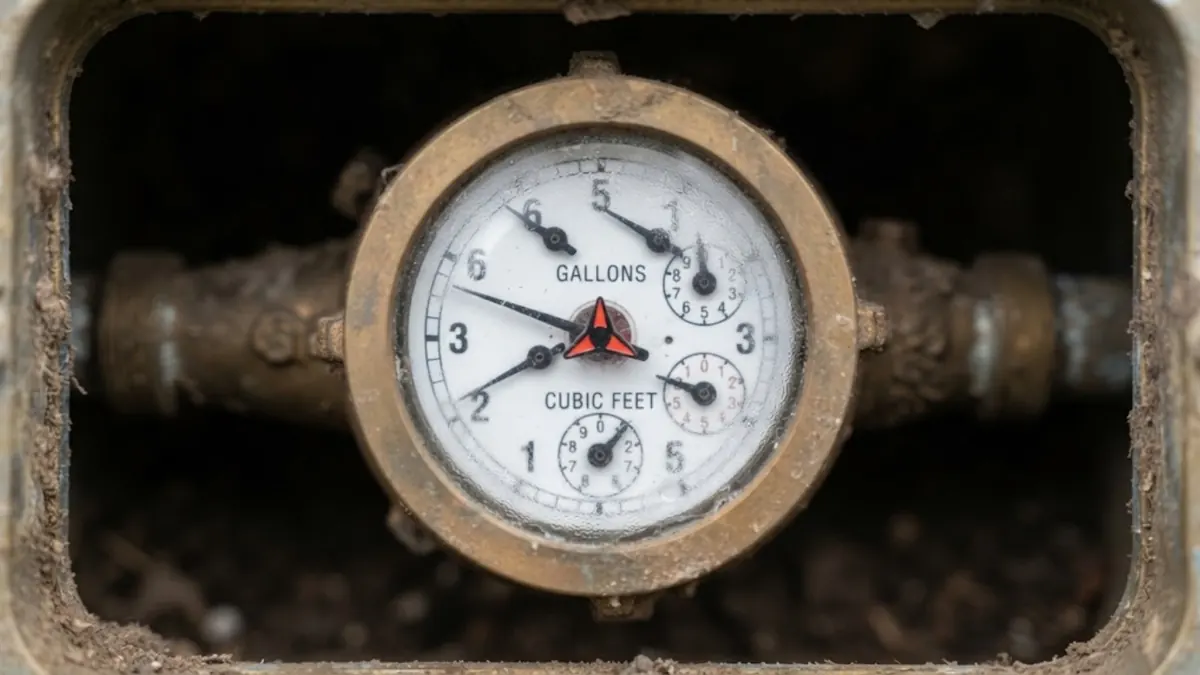
What to Do to Test for a Leak Using Your Meter
- Find your meter. It is usually in a covered box near the street or sidewalk. Lift the lid carefully.
- Turn off all water use. Every faucet, the washer, dishwasher, ice maker and any softener regeneration.
- Look for the leak indicator. Many meters have a small triangle or dial that spins with even tiny flows. If it moves, water is flowing.
- Write down the reading. Note every digit, then wait an hour without using any water.
- Read it again. Any change means water is escaping somewhere past the meter.
Where the Water Is Probably Going
Once the test confirms a leak, a few simple checks narrow down the source.
| Check | How to do it | If it points here |
|---|---|---|
| Toilets | Add food coloring to each tank, wait 15 minutes without flushing | Color in the bowl means a leaking flapper |
| House or yard line | Close the main valve at the house and watch the meter | Still moving means the buried service line |
| Water heater | Check the relief valve discharge pipe and base | Drip or water means a valve or tank issue |
| Softener | Check if it is stuck in regeneration | Constant flow to the drain |
| Outdoor faucets | Look for drips and wet walls near spigots | Worn washer or split pipe |
Toilets Cause More High Bills Than Anything Else
A toilet with a worn flapper leaks water from the tank into the bowl silently, all day and all night. The fill valve tops it up, and the water goes straight to the sewer. Because it makes little noise, it can run for months before anyone notices the bill.
The dye test above finds it in 15 minutes, and a new flapper is usually a small fix. Our Nampa toilet repair page covers the other causes of a running toilet.
Meter Spinning With Everything Off?
If you cannot find the source, call for leak detection.
When the Leak Is Not Obvious
If toilets, fixtures and the water heater check out and the meter still moves, the leak is hidden: inside a wall, under the house, under a slab or along the buried line from the meter.
Warm spots on a floor point to a hot water line in the slab. Damp, musty air in a crawlspace points under the house. A strip of lush grass between the meter and the house in winter, when irrigation is off, points to the service line.
Professional leak detection uses isolation, acoustic equipment and thermal imaging to find the spot before anything is opened. Homes in towns without pressurized irrigation in every subdivision, such as parts of Kuna, also need to include outdoor lines in the search, since lawns there may run on drinking water.
Ask About a Leak Adjustment
Some water providers offer a one-time bill adjustment after a leak is repaired. Keep the plumber's invoice showing the cause and repair date, and ask your provider whether an adjustment is available.
Reading Your Bill for Clues
Compare the current bill with the same month last year rather than last month. Water use naturally changes with seasons, so a winter bill that matches a summer one is a red flag.
A steady, even increase over several bills points to a slow leak that has been running a while, such as a toilet flapper. A sudden jump in one cycle points to a new failure, such as a split pipe or a stuck softener.
Keeping a few past bills handy makes these comparisons easy and gives the plumber useful context.
Small Drips Add Up Faster Than You Think
A faucet dripping once a second does not look like much, but it runs every hour of every day. Over a month, that adds up to a noticeable amount of water on the meter and the sewer charge.
Walk through the house and check every faucet, showerhead and tub spout after they have been off for a few minutes. Look under sinks for damp cabinet floors, and check the washing machine hoses and the ice maker line behind the refrigerator.
Outside, check hose bibs for drips and look at the wall below them for staining. A spigot that leaks inside the wall after a freeze can run for weeks before it shows.
Common Questions
A badly leaking toilet can waste a large amount of water every day, enough to noticeably raise a bill. The dye test finds it quickly.
A softener stuck in its regeneration cycle can send water to the drain continuously. Check that it is not running when it should be idle.
Look at usage changes such as guests, new appliances or outdoor watering with city water. If nothing explains it, ask your water provider to check the meter reading.
No meter is involved. Instead, watch whether the well pump cycles when no water is being used, which points to a leak or a pressure tank issue.
Usually not, because pressurized irrigation is unmetered and billed by lot size. The exception is a home that irrigates with city drinking water, where outdoor leaks do show up on the meter.
If water is actively damaging something, yes, close the main or the fixture valve. For a slow drip you have found and can see, a scheduled repair is usually fine.