Which Parts of a Treasure Valley Home Freeze First
Nampa does not get Minnesota winters, which is exactly why frozen pipes catch people off guard. The City of Nampa lists an average January low of about 21°F, and most winters bring a stretch of nights in the teens. That is plenty cold enough to freeze water in a pipe that sits against outside air.
The good news is that frozen pipes are predictable. They happen in the same few places in almost every Treasure Valley house. Protect those spots and you remove most of the risk.
Dealing with a plumbing problem right now? Call (208) 679-8357, answered 24/7.
The Usual Freeze Points, Most Likely First
This ranking reflects how exposed each location is to outside air, which is what actually freezes water.
| Rank | Location | Why it freezes |
|---|---|---|
| 1 | Hose bibs and outdoor spigots | Water sits right at the exterior wall, often with a hose still attached |
| 2 | Crawlspace supply lines | Foundation vents let cold air circulate around uninsulated pipe |
| 3 | Pipes in exterior walls | Little insulation between the pipe and the siding, especially on north walls |
| 4 | Garage lines and water heaters | Unheated space, worse when the door is left open |
| 5 | Irrigation and backflow assemblies | Water left in after the October shutdown |
Hose Bibs: Small Valve, Big Leak
A standard outdoor faucet holds water right at the wall. When it freezes, the valve body or the pipe just inside splits. You often will not know until spring, when you open the spigot and water pours inside the wall instead of out of the hose.
Frost-free sillcocks move the actual shutoff several inches inside the heated wall, so the exposed part drains when closed. They only work if the hose is disconnected, because a hose traps water in the valve. A foam cover adds a little protection, but disconnecting the hose matters far more.
Crawlspaces: Where Most Valley Homes Hide Their Pipes
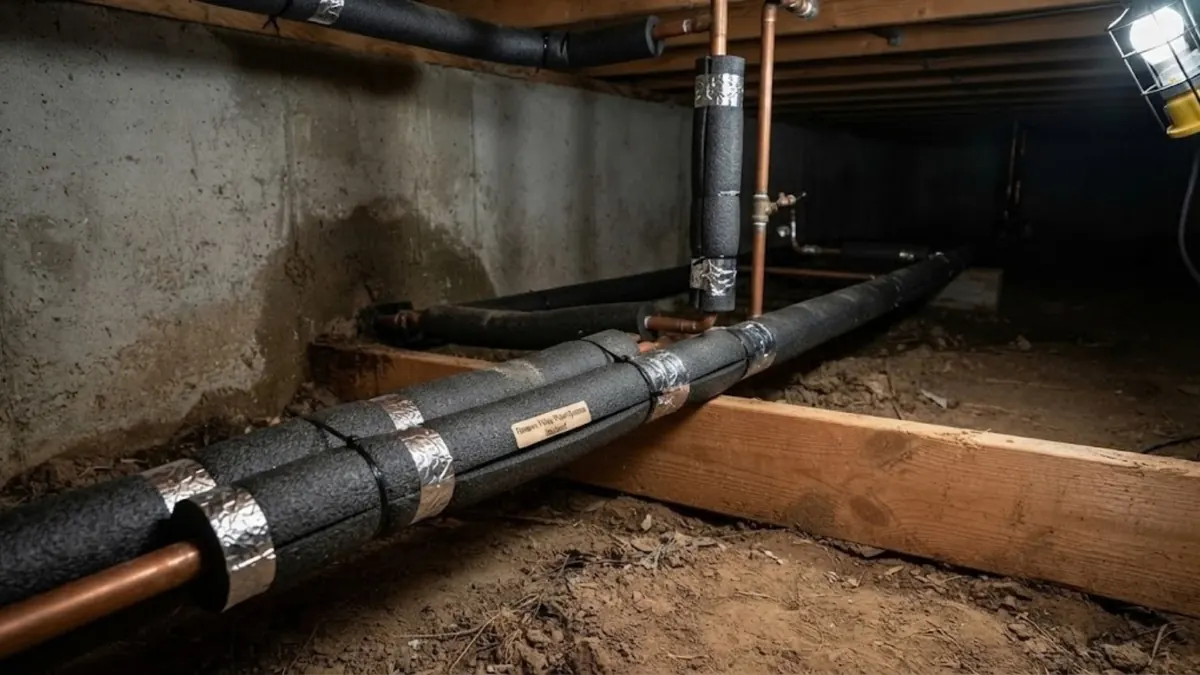
Many Treasure Valley houses sit over vented crawlspaces rather than basements or slabs. Those vents exist to control moisture, but in a cold snap they pull freezing air right across the supply lines.
Check that every supply pipe in the crawlspace wears insulation, with no gaps at elbows and valves. Pay extra attention near the access hatch and along the side facing prevailing winds. If your home's design allows it, closing foundation vents during hard freezes keeps the crawlspace noticeably warmer.
Crawlspace lines are also where many leaks start. A Nampa leak detection visit can check a crawlspace that feels damp or smells musty after winter.
Exterior Walls, Garages and Irrigation
Kitchen and bathroom sinks on exterior walls freeze when cabinet doors trap cold air around the pipes. Opening those doors on the coldest nights lets house heat reach them, and a slow drip keeps water moving.
Garages are unheated by design. Water heaters and laundry lines there are safe while the door stays closed and the house wall stays warm. Leaving the garage open on a cold night is how a laundry supply line splits.
Irrigation lines and backflow assemblies freeze when they are not drained after the season ends in early October. That damage shows up in spring rather than winter, but it starts on the first hard freeze.
Pipe Frozen or Already Split?
If water is spraying, close the main shutoff first. Then call for help.
How to Tell Which Problem You Have
The symptoms differ, and so does the urgency.
| What you see | Likely situation | What to do |
|---|---|---|
| One faucet gives a trickle or nothing | That branch is frozen | Open the tap, warm the area safely, call if it does not free up |
| No water anywhere in the house | Freeze near the main or service line | Call, this is harder to reach |
| Water spraying or pooling | Pipe has already split | Close the main immediately, then call |
| Water returns but you hear dripping inside a wall | Split pipe thawing | Close the main and call |
What to Do If a Pipe Freezes
- Keep the faucet open. Moving meltwater helps the rest thaw and relieves pressure.
- Use gentle heat. A hair dryer, a space heater kept at a safe distance or warm towels. Never a torch or open flame.
- Work from the faucet back. Start near the open tap so meltwater has an exit.
- Watch for leaks as it thaws. Splits often only show once pressure returns. Have the main shutoff ready.
- Call if you cannot reach it. Pipes inside finished walls are safer thawed by a plumber with proper equipment. See frozen pipe repair in Nampa.
Before Next Winter
A one-time fall walk-through handles most of this: insulate crawlspace lines, swap old hose bibs for frost-free sillcocks, disconnect hoses, drain irrigation through your own valve and know where the main shutoff is.
Newer homes are not exempt. Many recent builds in towns like Middleton sit over crawl spaces too, so the same checklist applies on day one.
Leaving Home During a Cold Snap
Many frozen pipe calls come from homes whose owners were away over the holidays. Keep the heat on while you are gone, set to a steady temperature rather than turned way down, and leave cabinet doors open on exterior-wall sinks.
For a longer trip, shutting off the main water valve and opening a faucet at the lowest point drains much of the system. If a pipe does split while you are away, far less water escapes.
Ask a neighbor to check the house after a hard freeze. A leak found in a day does a fraction of the damage of one found in a week.
Why Newer Homes Still Freeze
Modern building codes and PEX piping have made freezing less common, but not rare. Newer homes can still have supply lines routed near exterior walls, crawlspaces with vents left open all winter, and hose bibs with hoses left attached.
PEX tolerates freezing better than copper because it can stretch slightly, but its fittings can still pull apart or crack. A frozen PEX line is also still a line with no water.
If you own a newer home, spend ten minutes the first fall finding the main shutoff, checking crawlspace insulation and disconnecting hoses. Those three steps cover most of the risk regardless of the home's age.
Common Questions
There is no single number. Pipes exposed to outside air can freeze when temperatures stay in the low 20s or teens for several hours. Insulated pipes inside heated space are far safer.
Closing them during hard freezes helps keep the crawlspace warmer, if your home's design allows it. Reopen them in spring to control moisture.
Listed heat cable installed following the manufacturer's instructions is widely used. Do not wrap it over itself or cover it with materials the instructions do not allow.
Yes, especially hose bibs and irrigation lines. Test outdoor faucets and irrigation carefully when you first turn them on.