Crawlspace Leaks in Canyon County Homes: Signs to Watch and What to Check
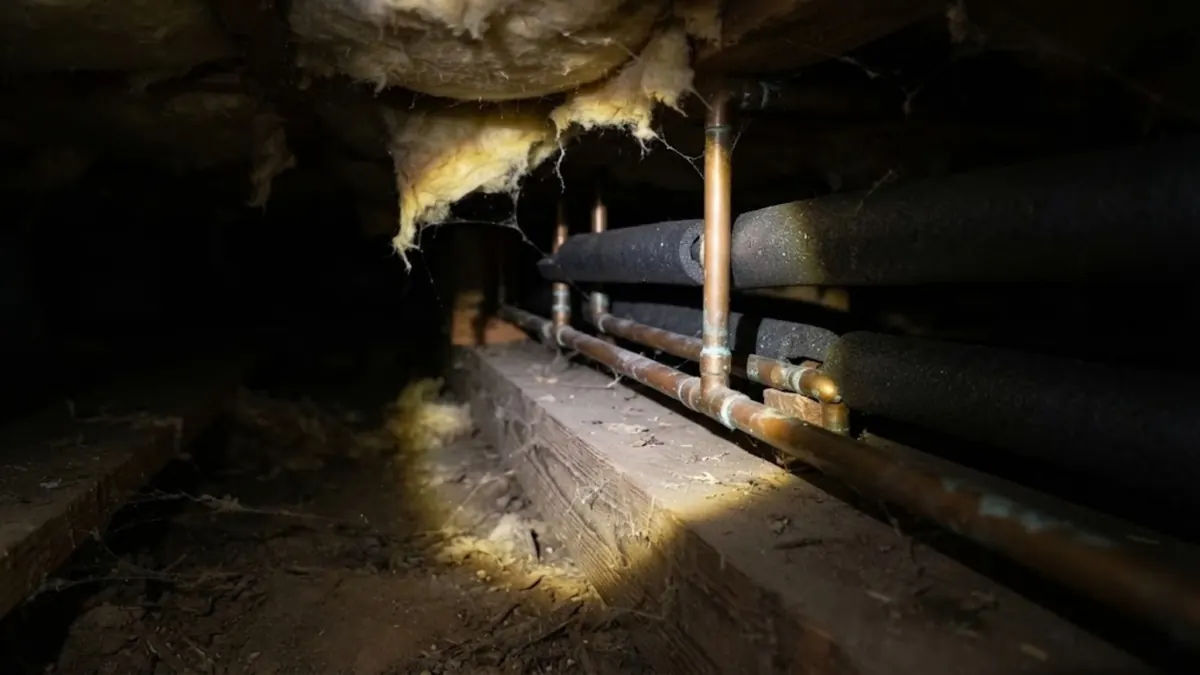
A lot of Canyon County homes sit over crawlspaces rather than basements or slabs. That puts supply lines, drains and often the main shutoff in a space most owners rarely enter. A leak there can run for weeks before anyone sees water.
This guide covers the signs that something is leaking under the house, how to check without getting hurt, and what the common causes are.
Crawlspaces also make leaks easy to ignore. Most owners enter theirs rarely, maybe once when buying the house and again when something goes wrong. A few minutes with a flashlight twice a year, at the access hatch if nowhere else, catches most slow leaks while they are still cheap to fix and before insulation and subfloor have soaked up weeks of water.
Dealing with a plumbing problem right now? Call (208) 679-8357, answered 24/7.
Signs of a Leak Under the House
Most crawlspace leaks announce themselves indirectly. Watch for these.
| What you notice | Why it happens |
|---|---|
| Musty or earthy smell inside the house | Damp soil and wet insulation below the floor |
| Higher humidity, condensation on windows | Moisture rising from the crawlspace |
| Soft or cupping floors, especially near baths and the kitchen | Subfloor absorbing moisture |
| Water meter moving with everything off | An active supply leak |
| Sewer smell in one area | A drain line leaking under the house |
| More bugs than usual indoors | Moisture attracting pests below |
What to Do Before Going Into the Crawlspace
Crawlspaces can be tight, dark and occasionally hazardous. A few precautions matter.
- Turn off the water if you see active leaking from the hatch. Use the main shutoff, which in many crawlspace homes is near the access point.
- Bring a good light and wear coveralls, gloves and a mask. Old insulation and dust are unpleasant, and damp spaces can hold mold.
- Watch for electrical hazards. Do not touch wiring or junction boxes if there is standing water.
- Look, do not disturb. Note wet insulation, puddles, dripping pipes and wet soil, and photograph them.
- Get out if anything seems unsafe. Sewage, heavy mold or deep water are jobs for professionals.
What Usually Leaks Under the House
Supply lines leak at fittings, especially where pipes were stressed by freezing in a past winter. Drain lines leak at old joints or where a trap or cleanout has worked loose. Water heater relief valve lines routed under the floor can drip without anyone noticing.
Freezing is the most common trigger. Crawlspace vents let winter air across pipes, and a small split from January can drip quietly for months. Insulating crawlspace lines is the most effective prevention, and fixing lines that froze covers the winter side.
In spring, irrigation water outside can also raise moisture near the foundation, which is why confirming whether water is coming from plumbing or from outside matters.
Water Under the House Right Now?
Close the main shutoff and call for help finding and fixing the leak.
Fixing It and Drying It Out
The first job is finding the exact source. A crawlspace leak can travel along a pipe or joist before dripping, so the wet spot is not always under the leak. Locating the leak professionally isolates the supply side with the meter and pressure tests before anything is cut.
Once repaired, a wet crawlspace needs to dry. Soaked insulation usually has to come out, and standing water needs removal. For significant water, a restoration crew handles extraction and drying, which is a separate service from the plumbing repair.
Many newer homes in towns like Middleton are built over crawl spaces too, so a yearly look under the house is worthwhile at any age.
A Twice-a-Year Crawlspace Walk-Through
In fall, check that pipe insulation is intact, especially near vents and the access hatch, and look for any drips before winter. In spring, look again for anything that split or loosened during cold weather, and check that the soil is dry.
Take a few photos each time. Comparing them over the years makes slow changes such as sagging insulation, new stains or rising moisture much easier to spot.
If your home has a vapor barrier on the soil, check that it is intact and not holding puddles on top, which usually means water is coming from above.
Plumbing Leak or Outside Water: How to Tell
Water under a house comes from plumbing or from outside. The fix is very different, so it is worth sorting out first.
| Clue | Points to plumbing | Points to outside water |
|---|---|---|
| Water meter moves with all fixtures off | Yes | No |
| Wet area appears after rain or irrigation | No | Yes |
| Water is warm or steaming in winter | Yes, a hot water line | No |
| Wetness concentrated under a bathroom or kitchen | Likely | Less likely |
| Wetness along one foundation wall | Possible | Likely, check gutters and grading |
| Sewer smell | Yes, a drain line | No |
If outside water is the cause, gutters, downspouts, yard grading and irrigation spray against the foundation are the usual culprits, and a plumber may not be the right first call. If the clues point to plumbing, pinpointing the leak before anything is opened keeps the repair small.
Common Questions
Some humidity is normal, but standing water, wet insulation or damp soil that does not dry out are not. Those point to a leak or drainage issue.
Yes. Wet insulation and wood that stay damp can support mold growth. Fixing the leak and drying the space quickly is the best prevention.
Small amounts, with gloves and a mask, are manageable. Large areas or sewage-contaminated insulation are better handled by professionals.
If the water meter moves with everything off, the leak is on the supply side. Water that appears after rain or irrigation and no meter movement points to outside drainage.
Twice a year is a good routine, once in fall before freezing weather and once in spring after it. Also check any time you notice a musty smell, a soft spot in the floor or a jump in the water bill, since those often come from below.
A leaking drain can release sewer gas and create unsanitary conditions under the home. We do not make health claims, but a drain leak should be repaired promptly and the area cleaned. If you have health concerns, talk with your health care provider.
Under the Uniform Plumbing Code (UPC), the relief valve discharge must terminate in an approved location where it can be seen. A pipe that ends out of sight under the house can hide a problem for months. A plumber can reroute it if needed.