Backflow Testing in Nampa and Why Pressurized Irrigation Changes the Answer
Backflow is the kind of plumbing topic most homeowners never think about until a notice arrives in the mail. In Nampa, the answer to whether you need backflow protection depends heavily on how your lawn is watered.
This guide explains what backflow is, why Nampa's separate irrigation system matters, when a device and annual testing are required, and how to protect an assembly through winter.
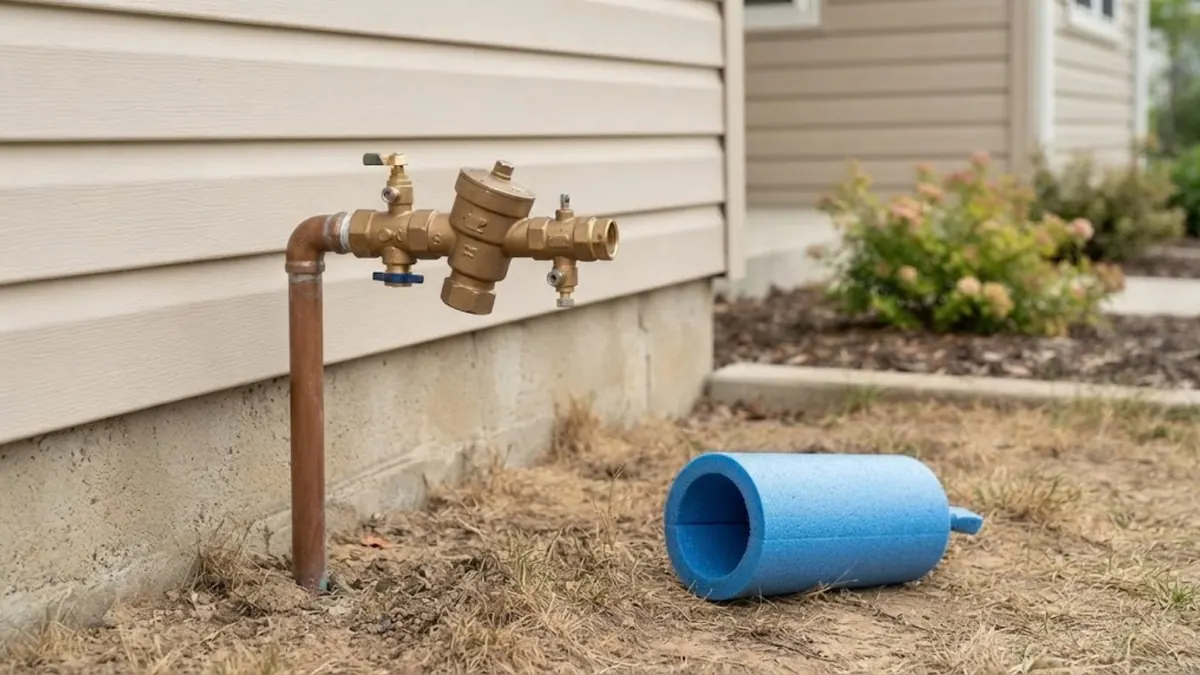
A quick way to know where you stand: walk to the spot where your sprinkler main leaves the house or valve box. A brass device with small screw-in test cocks is a testable backflow assembly. If there is none and your lawn runs only on canal water, you may not need one, but the sections below explain the exceptions.
Dealing with a plumbing problem right now? Call (208) 679-8357, answered 24/7.
What Backflow Is and Why It Matters
Water normally flows one way, from the public supply into your home. If pressure drops in the supply, for example during a main break or heavy firefighting, water can be pulled backward. If a hose is sitting in a bucket of fertilizer or a sprinkler line connects to drinking water, that contaminated water can be drawn into the supply.
A backflow prevention assembly uses spring-loaded check valves to stop that reverse flow. Because the parts wear and foul quietly, the only way to know an assembly still works is to test it.
How Pressurized Irrigation Changes the Picture
Most Nampa subdivisions water lawns from a canal-fed pressurized irrigation system that is entirely separate from drinking water. When a sprinkler system runs only on that irrigation water, it has no connection to the drinking supply, which removes the most common residential cross-connection.
The situation changes when a sprinkler system is fed from city drinking water, or when the two systems are connected anywhere, for example with a valve to switch a zone to city water when irrigation is off. Any connection like that needs backflow protection.
Kuna, for example, prohibits cross-connections between domestic and irrigation lines that do not meet its rules, and the Uniform Plumbing Code (UPC) requires backflow protection for sprinkler systems connected to potable water.
Common Backflow Devices on Homes and Businesses
The type is usually stamped on the device body.
| Device | Typical use | Testable? |
|---|---|---|
| Pressure vacuum breaker (PVB) | Residential sprinklers on potable water | Yes |
| Double check valve assembly | Fire lines, lower-hazard services | Yes |
| Reduced pressure zone assembly (RP) | Higher-hazard commercial uses | Yes |
| Hose bib vacuum breaker | Outdoor faucets | No, but required on hose connections |
Backflow Device Leaking After Winter?
Close the shutoff ahead of it and call for repair and retesting.
What to Do Each Fall to Protect a Backflow Assembly
- Close the supply valve ahead of it. Use your own valve, never a city valve.
- Open the test cocks. Turn the small test cock screws a quarter turn to let trapped water out.
- Set the ball valves halfway. This lets water drain from inside the valve bodies.
- Insulate or cover it. An insulated bag or cover helps on above-ground assemblies.
- Test in spring if it froze. A cracked body or damaged check will fail its test. Repair, then retest.
How Annual Testing Works
Backflow assemblies in Idaho are commonly required to be tested once a year, as well as after installation or repair. A certified tester connects gauges to the test cocks and checks that each check valve holds and each relief valve opens at the right pressure. The results go to the water provider on the form they specify.
A failed test usually means replacing springs, checks or seals, followed by a retest. Our Nampa backflow page covers repairs and replacement, and our freeze damage repair page covers the damage that causes many spring failures.
Neighboring communities such as Star, where new irrigation connections are added constantly, follow the same annual routine.
Backflow for Commercial Properties
Commercial buildings often have backflow assemblies on the main water service, fire sprinkler lines and equipment such as boilers, carbonated drink machines or chemical dispensers. These typically require higher-protection assemblies and annual testing.
Missing a test deadline can lead to notices from the water provider. Keeping test reports in one place and scheduling tests at the same time each year avoids that.
Businesses that run irrigation from city water also need protection on those connections, just like homes.
What a Failed Spring Test Usually Means
Most failed tests trace back to a few causes. Knowing them helps you understand the repair quote.
| Test result | Likely cause | Typical repair |
|---|---|---|
| Check valve will not hold | Debris on the seat, worn rubber, weak spring | Clean or replace the check |
| Relief valve opens too early or not at all | Worn diaphragm or seat on an RP assembly | Rebuild the relief valve |
| Water leaking from the body | Freeze crack | Replace the assembly |
| Shutoff valve will not close fully | Worn ball valve | Replace the shutoff, then retest |
After any repair, the assembly is retested and the passing result filed with the water provider. Freeze cracks are the one failure that is entirely preventable with a proper fall drain-down.
Common Questions
Look near where the sprinkler line leaves the house or near the irrigation valve box for a brass assembly with small test cocks. If your sprinklers only use canal irrigation water, you may not have one.
Yes, especially after freezing. A cracked body or failed check valve can drip or spray and will usually fail its test.
Testing is done by certified backflow assembly testers using calibrated gauges. Results go to the water provider.
Water providers can take follow-up action, which may include service restrictions. It is simpler to schedule the test.
Yes. The plumbing code requires backflow protection at hose connections, which is why most modern outdoor faucets have a built-in vacuum breaker. If yours is an older spigot without one, an inexpensive screw-on vacuum breaker adds protection. Replace it if it starts leaking from the cap.
The official annual test has to be done by a certified tester with calibrated gauges, because the results are filed with your water provider. You can still inspect it yourself for leaks, cracks and damaged insulation, and drain it before winter.
Every assembly causes a small pressure loss as water passes through its check valves. A properly sized assembly will not be noticeable at sprinkler heads, but a fouled or failing check can reduce flow, which is another reason annual testing matters.